Group discussions are a regular part of college admissions and campus placements in India. Eight or ten people, one topic, fifteen minutes, and someone quietly taking notes on all of you. For many people it is more stressful than a speech, because there is no turn. You have to find your own way in.
The good news: a group discussion doesn't reward the loudest person in the room. It rewards the person who makes clear points, listens, and helps the group get somewhere. Those are skills you can practise.
What a group discussion is really testing
Every panel is different, but most are watching for the same few things:
- Clear thinking: do your points make sense and stay on the topic?
- Communication: can people follow you easily?
- Listening: do you respond to what others actually said?
- Teamwork and leadership: do you help the discussion move forward, or just wait for your turn?
Notice that "talking the most" isn't on the list. Three good contributions beat ten rushed ones.
Before it starts
- Keep up with the news. Many topics come from current affairs, business, education and technology. Ten minutes of reading a day builds the background you need.
- Use the thinking time. If you get a minute before you begin, note down two or three points and one example. You don't need a speech, just a direction.
- Sit where people can see you. If you get a choice, pick a seat where you can make eye contact with most of the group.
Getting in: the hardest part
The first minute is often the busiest, with several people talking at once. You don't have to speak first. Speaking early is useful, but speaking clearly matters more. If you can't open, aim to make your first point within the first few minutes, before nerves grow.
To enter, wait for a small pause and use a short bridge that links to what was just said:
- "Building on that point…"
- "I'd like to add another angle…"
- "That's true for cities, but in smaller towns…"
Say it at a normal volume, look around the group (not only at the panel), and go straight to your point.
Make each point count
Use the same simple structure that works for impromptu speaking:
- Point: say what you think in one sentence.
- Reason or example: one reason, one fact or one short example from real life.
- Link: connect it back to the topic or to the group.
That takes about thirty seconds, which is the right length for a group discussion. Long speeches lose people and give others a reason to interrupt. If you'd like to practise this structure, our post on answering a question you didn't expect has 30 practice questions.
Disagree without arguing
Disagreeing well is one of the best things you can show in a group discussion. Disagree with the idea, never the person, and acknowledge their point first:
- "I see why you'd say that, but I think…"
- "That works in some cases. The problem is…"
- "Let me look at it from the other side…"
Keep your voice calm. A calm person disagreeing sounds more confident than a loud one.
Help the group, and you help yourself
- Bring someone in. If a person has been trying to speak, say "I think Riya wanted to add something." It shows leadership without taking over.
- Bring the group back. If the discussion drifts, a line like "Coming back to the main question…" is valuable.
- Don't fight the loudest person. If someone keeps talking over others, don't raise your voice. Wait for them to finish and make your point clearly. The panel notices both of you.
Finish strong
If you are asked to summarise, or the discussion is winding down, a short summary is a great last contribution: two or three main points the group made, including views you didn't agree with, said fairly. People remember the end.
Common mistakes
- Staying silent for the whole discussion, waiting for a perfect moment.
- Repeating a point someone already made, in different words.
- Talking only to the panel instead of the group.
- Using facts or numbers you aren't sure of. If you don't know, give an example instead.
- Speaking too fast because you're nervous. Slowing down makes you sound more confident.
How to practise
You can read about group discussions, but you only get better by doing them. Practise with friends: pick a topic, set a ten-minute timer, and afterwards tell each other one thing that worked and one thing to change. Speaking to a group often, even briefly, is what makes it feel normal. Our guide to building speaking confidence one week at a time shows how to build that habit.
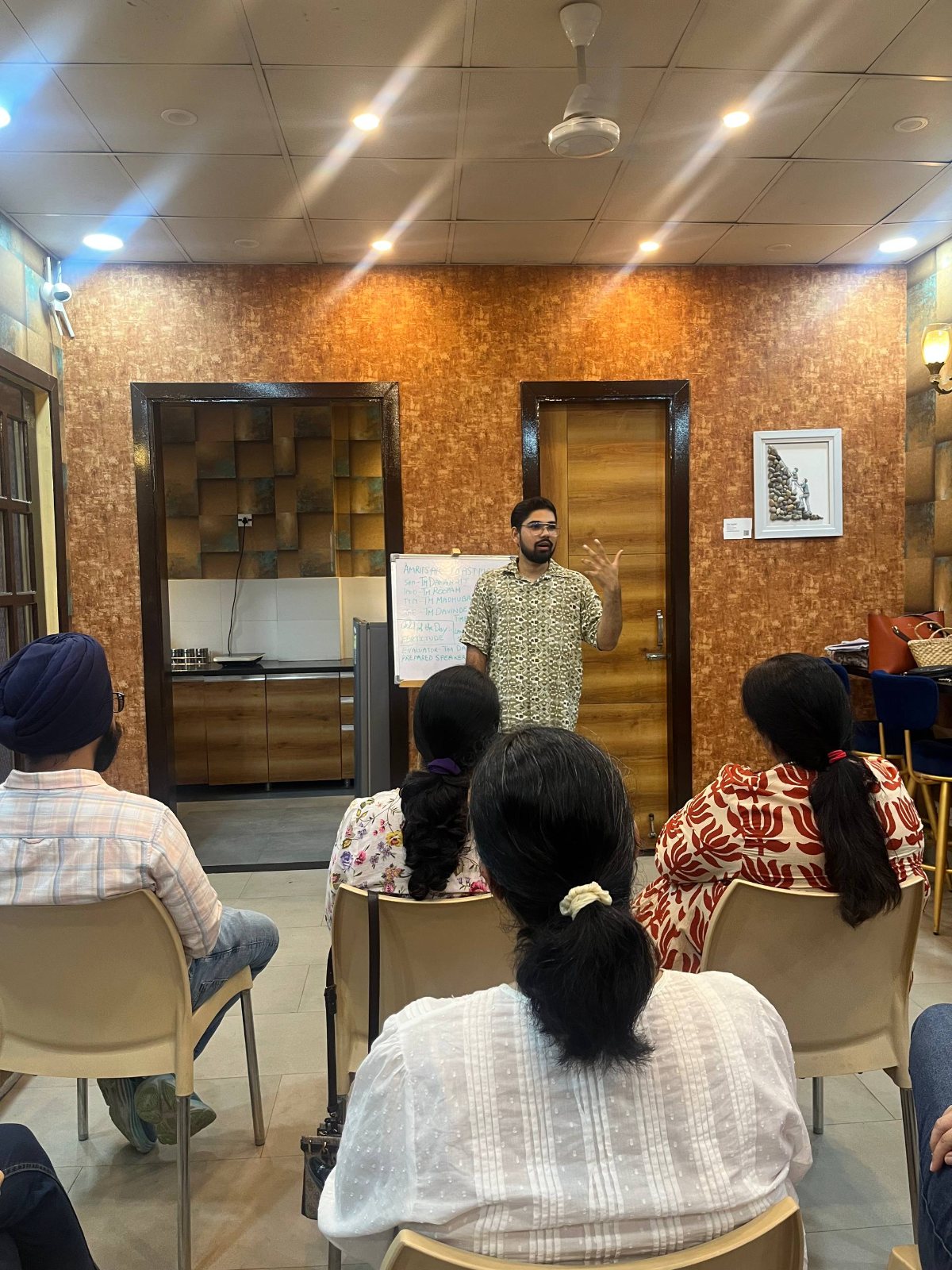
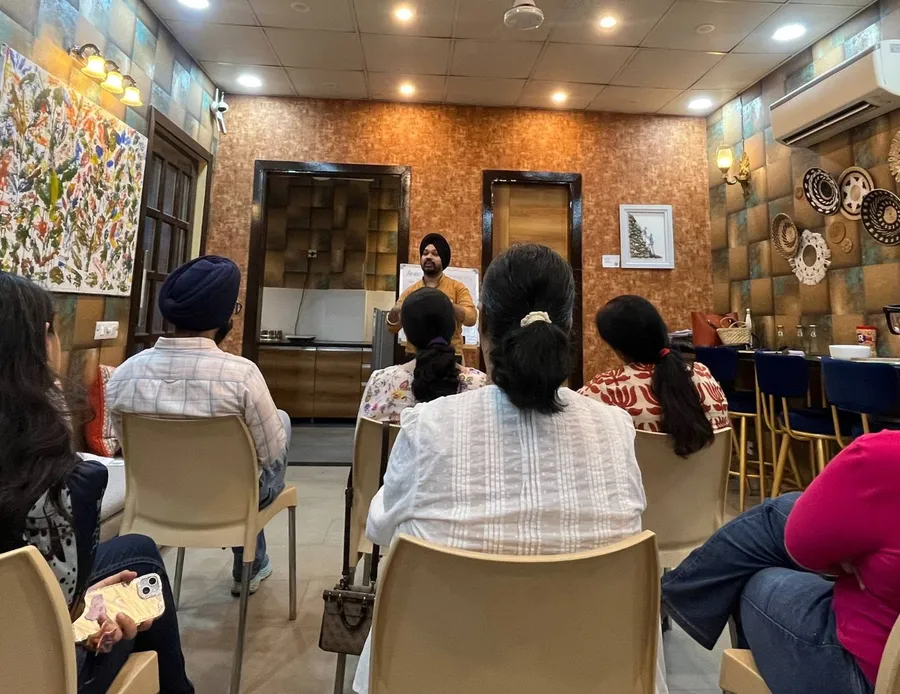
The skills behind a good group discussion are exactly what we practise at Amritsar Talkmasters every Saturday from 4 to 6 PM: speaking clearly under time pressure, answering surprise questions, listening, and giving and taking feedback. See what a meeting looks like, or come to your first one.